CDEA 6501 Cocamide DEA Foam Booster and Thickener
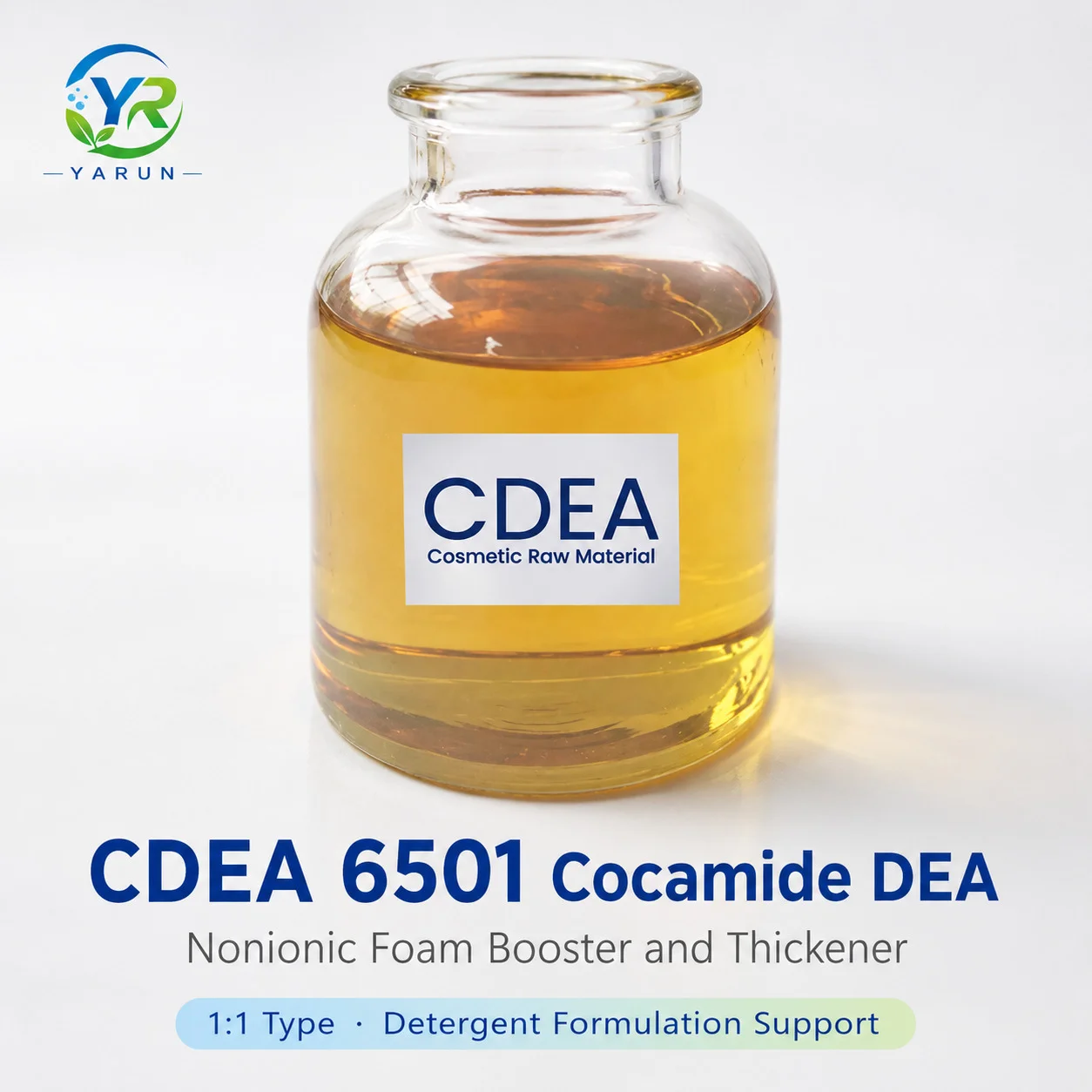
YARUN CDEA 6501 is a 1:1 type Cocamide DEA nonionic co-surfactant used to support foam stability, viscosity development and formulation compatibility in liquid detergent, dishwashing liquid, shampoo, hand wash and industrial cleaning products. It can be combined with SLES, LABSA, AOS, SLS and other suitable surfactants according to the target formulation.
| NAME | VALUE |
|---|---|
| Commercial Grade | 1:1 Type |
| INCI / CAS No. | Cocamide DEA / 68603-42-9 |
| Ionic Character | Nonionic Co-Surfactant |
| Appearance | Yellow Viscous Liquid |
| Amide Content | ≥77% |
| Amine Value | ≤30 mgKOH/g |
| pH Value | 9.5–10.5 |
| Color | ≤500 Hazen |
| Reference HS Code | 3402420000 |
Product Description
CDEA 6501 for Foam and Viscosity Development
YARUN CDEA 6501, also known as Cocamide DEA or Coconut Diethanolamide, is a 1:1 type nonionic co-surfactant used in detergent, dishwashing, personal care and industrial cleaning formulations.
It is primarily selected to support foam stability, viscosity development, wetting and surfactant-system compatibility. CDEA 6501 can be combined with SLES, LABSA, AOS, SLS and other suitable surfactants according to the target application.
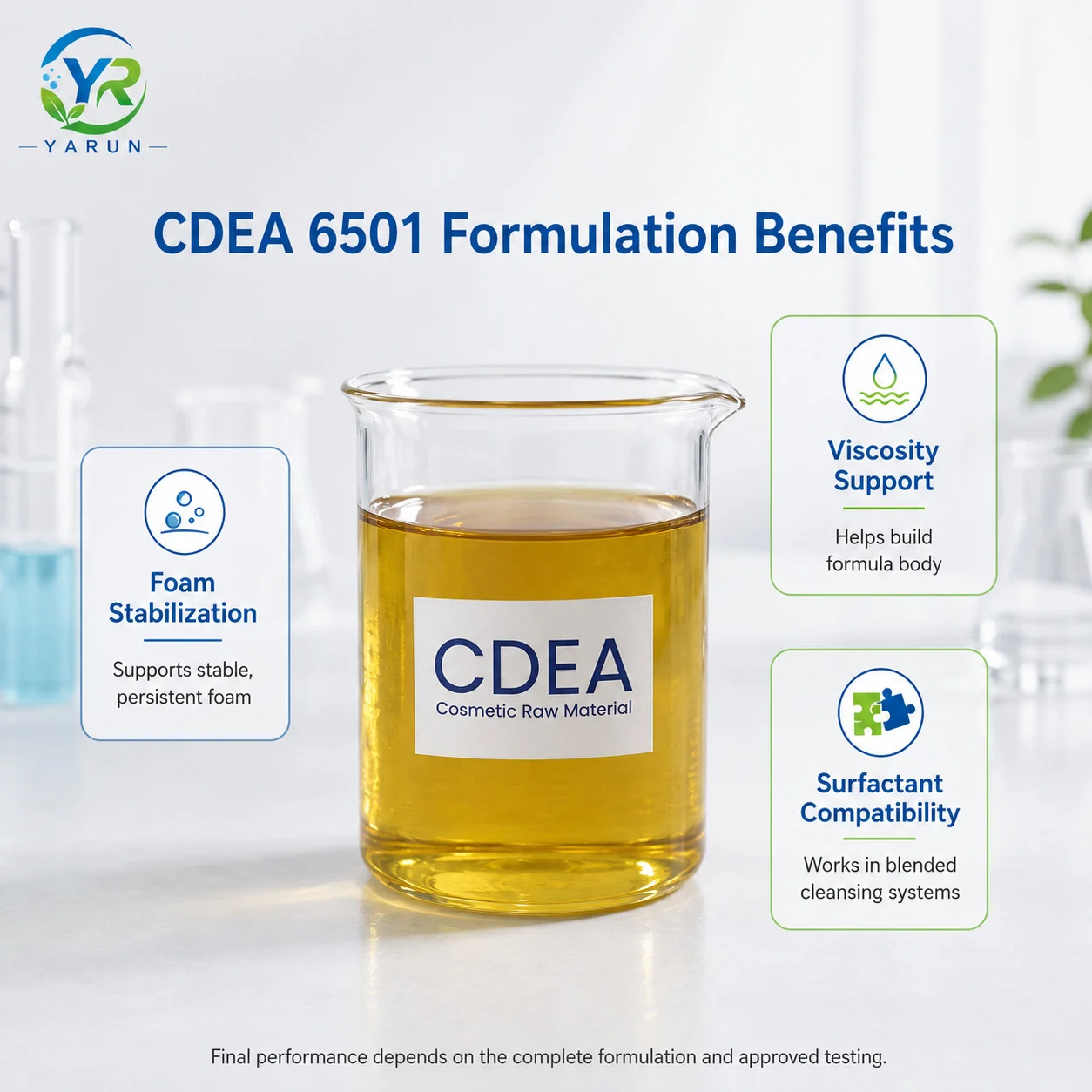
Foam Stabilization · Viscosity Support · Surfactant Compatibility
Final performance depends on the complete formulation, surfactant ratio, pH, electrolyte level, processing temperature and approved application testing.
Why Choose CDEA 6501?
Foam Boosting and Stabilization
When incorporated into a properly balanced surfactant system, CDEA 6501 can support foam volume, foam texture and foam stability in liquid detergent, dishwashing and cleansing formulations.
Viscosity-Building Support
CDEA 6501 is commonly used to support viscosity development in selected anionic surfactant systems. The actual thickening response depends on the primary surfactants, salt level, pH and processing conditions.
Compatible with Common Surfactants
As a nonionic co-surfactant, CDEA can be combined with suitable anionic and amphoteric surfactants to develop different cleaning, foam and viscosity profiles.
Multiple Cleaning Applications
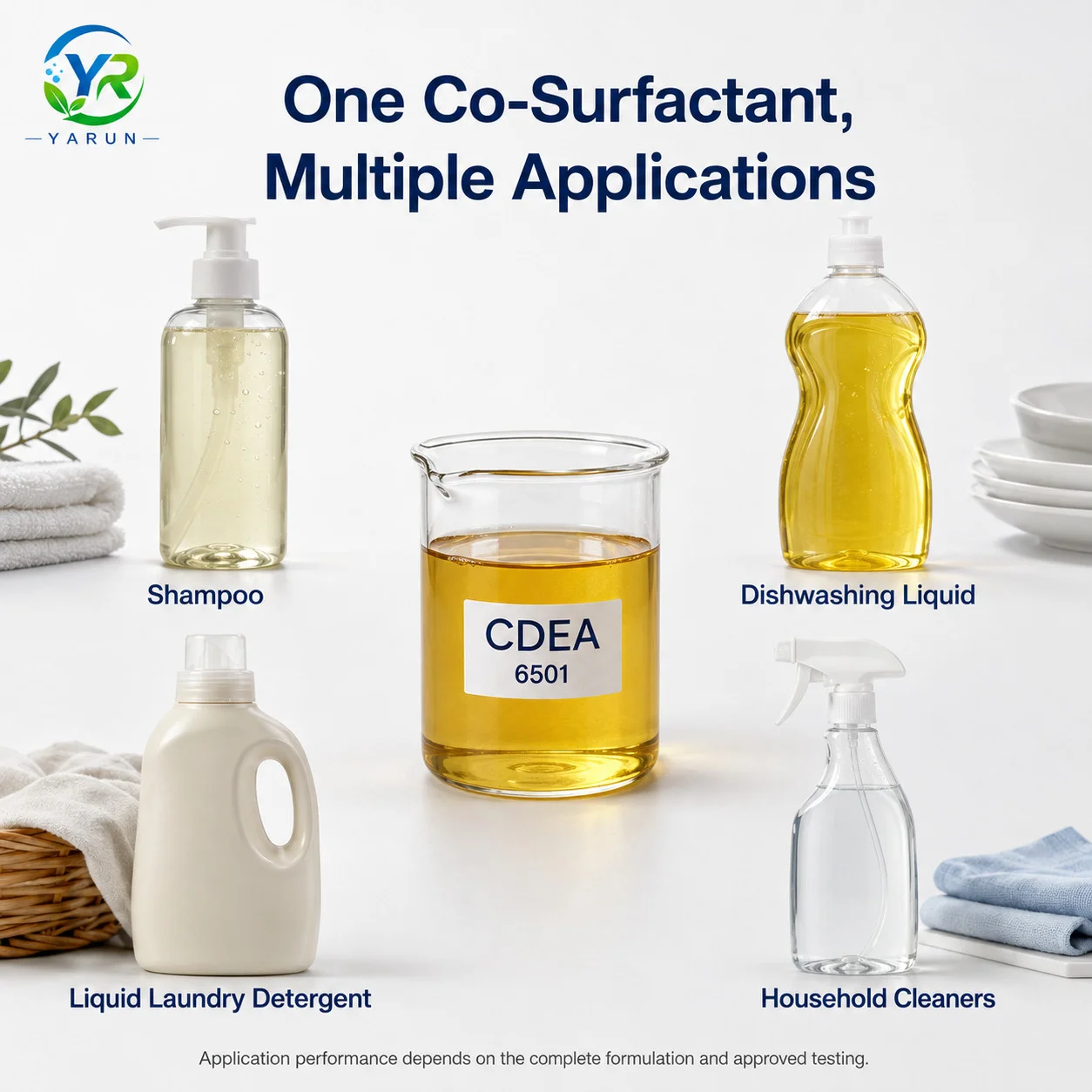
CDEA 6501 can support household cleaning, personal care and industrial cleaning projects, allowing manufacturers and distributors to use one co-surfactant across several formulation categories.
Recommended Applications
- Liquid laundry detergent
- Dishwashing liquid
- Liquid soap and hand wash
- Shampoo and body wash where permitted
- Household surface cleaners
- Car wash shampoo
- Industrial and institutional cleaners
- Textile and selected process-cleaning formulations
Application suitability, addition level and regulatory acceptance must be confirmed according to the complete formulation and destination-market requirements.
CDEA 6501 in Surfactant Formulations
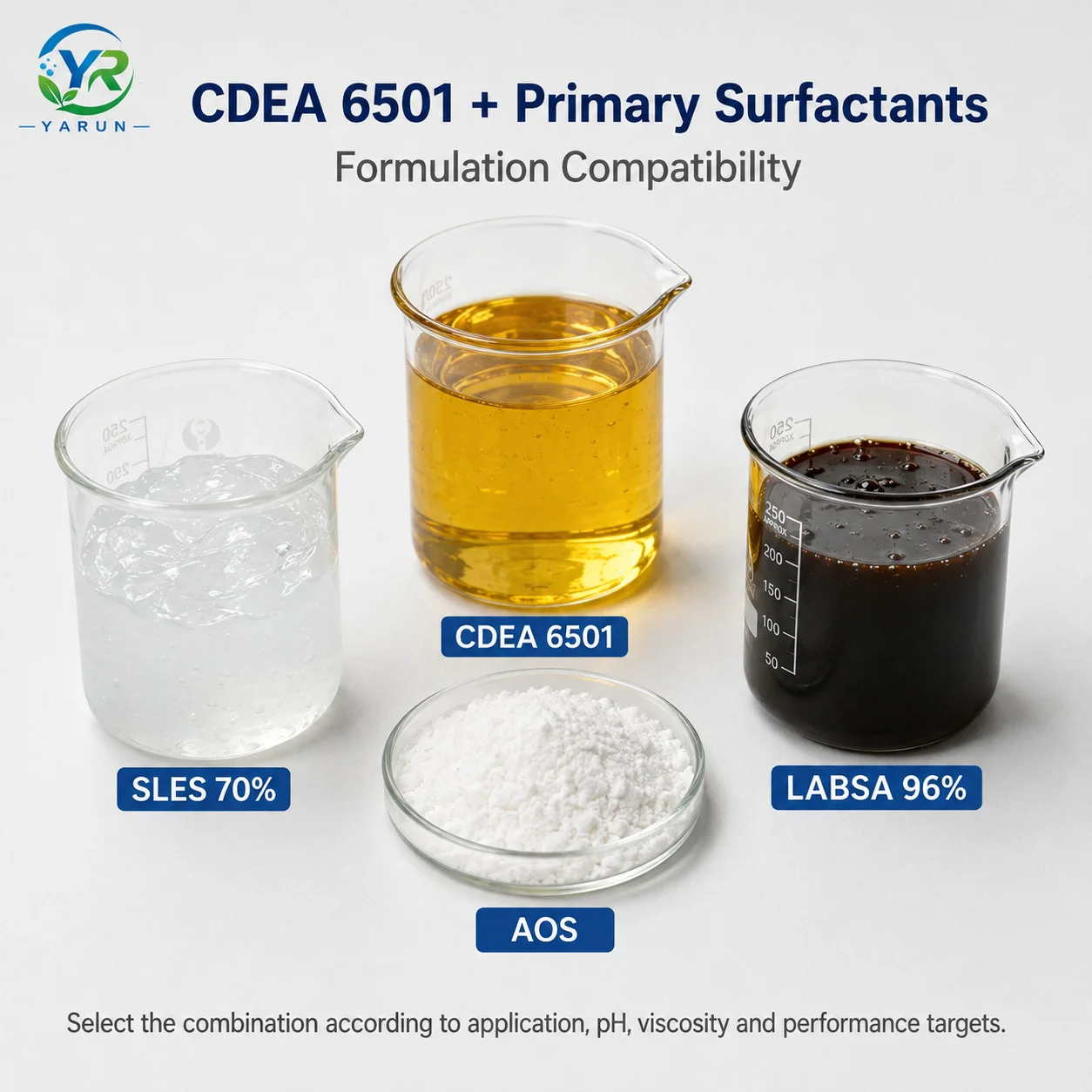
CDEA 6501 with SLES 70%
CDEA 6501 can be combined with SLES 70% in liquid detergent, dishwashing, hand wash and selected personal care formulations. SLES provides the primary cleansing and foaming function, while CDEA supports foam stability and viscosity development.
CDEA 6501 with LABSA 96%
In properly neutralized detergent systems, CDEA can be evaluated with LABSA 96% to support foam and viscosity in cost-balanced household or industrial cleaning formulations.
CDEA 6501 with AOS or SLS
CDEA can also be evaluated with AOS or SLS where formulators require additional foam stabilization, wetting or viscosity support.
CDEA 6501 with CAPB 35%
CDEA and CAPB 35% perform different formulation roles. CDEA is primarily selected for foam stabilization and viscosity support, while CAPB is an amphoteric co-surfactant used to balance foam quality, compatibility and formulation mildness.
The correct surfactant combination must be determined according to application, target viscosity, pH, electrolyte level, cost target and finished-product testing.
Typical Quality Profile
- Commercial grade: CDEA 6501 1:1 type
- Appearance: Yellow viscous liquid
- Amide content: ≥77%
- Amine value: ≤30 mgKOH/g
- pH value: 9.5–10.5
- Color: ≤500 Hazen
The values above represent the planned standard commercial grade. Final specifications, test methods and acceptance limits must follow the approved product specification and batch Certificate of Analysis.
Quality and Compliance Considerations
Buyers can request the available product specification, Certificate of Analysis, Safety Data Sheet and packaging information before commercial confirmation.
For personal care and consumer-product applications, buyers must evaluate free amine, formulation compatibility, potential nitrosamine-related requirements and other applicable regulatory limits according to the destination market.
CDEA 6501 should not be combined with incompatible ingredients or used to support finished-product safety claims without appropriate formulation review and testing.
Packaging and Storage
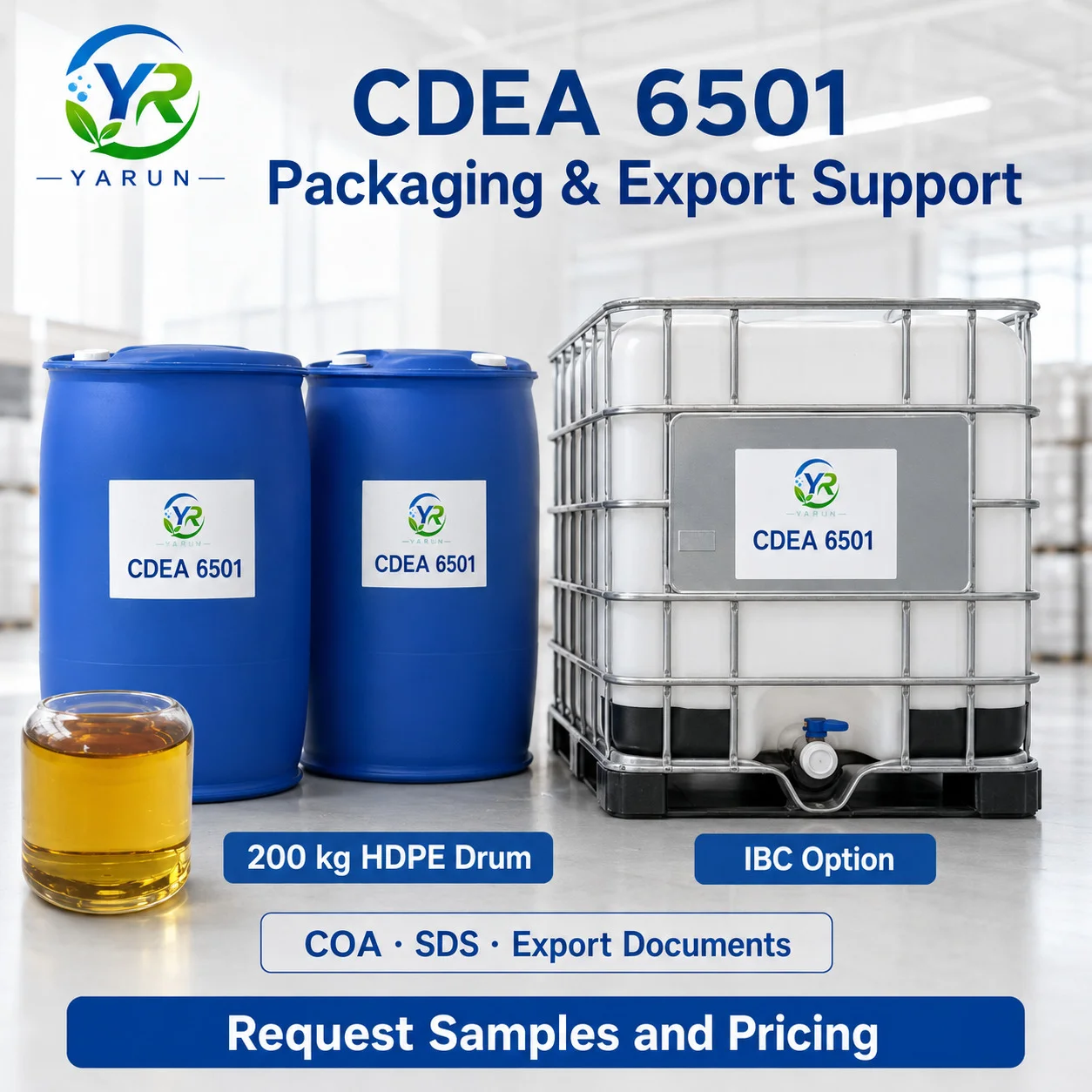
- Standard packaging: 200kg HDPE drum
- Alternative packaging: IBC tank subject to order confirmation
- Keep the original container tightly closed
- Store in a cool, dry and well-ventilated place
- Protect from direct sunlight, excessive heat and moisture
- Follow the SDS when handling and processing the material
- Recommended shelf life: 24 months in the original unopened packaging under specified storage conditions
Packaging availability, net weight and container-loading quantity must be confirmed before quotation.
Frequently Asked Questions
1. CDEA 6501 1:1 vs 1:1.5: What Is the Difference?
The 1:1 type generally provides higher amide content and a lower amine value, making it suitable for projects requiring more controlled quality and stronger formulation performance. The 1:1.5 type is usually selected for more cost-sensitive applications.
2. CDEA vs CAPB: Which Should I Use?
Choose CDEA mainly for foam stabilization and viscosity support. Choose CAPB for amphoteric compatibility, foam-quality adjustment and milder surfactant positioning. Some formulations may use both after compatibility testing.
3. What Products Can CDEA 6501 Be Used In?
It is commonly evaluated in liquid detergent, dishwashing liquid, liquid soap, shampoo, hand wash, car wash products and industrial cleaning formulations.
4. Can CDEA 6501 Be Combined with SLES, LABSA, AOS or SLS?
Yes. It can be used as a co-surfactant with these materials, but the correct ratio depends on the primary surfactant, pH, salt level, target viscosity and application requirements.
5. Does CDEA Automatically Thicken Every Detergent Formula?
No. Thickening response depends on the complete surfactant system, concentration, salt curve, pH and processing conditions. Laboratory testing is required.
6. What Addition Level Should Formulators Start With?
CDEA is often evaluated within a preliminary range of approximately 1–5%, but the final amount must be determined through formula testing and applicable regulatory review.
7. How Should Buyers Evaluate CDEA Before a Bulk Order?
Buyers should confirm the required grade, application, amide content, amine value, pH, color, packaging and destination requirements before requesting a sample and batch documentation.
Request CDEA 6501 Samples and Pricing
Contact YARUN with your application, required grade, target specification, packaging, destination port and estimated order quantity.
Related Products
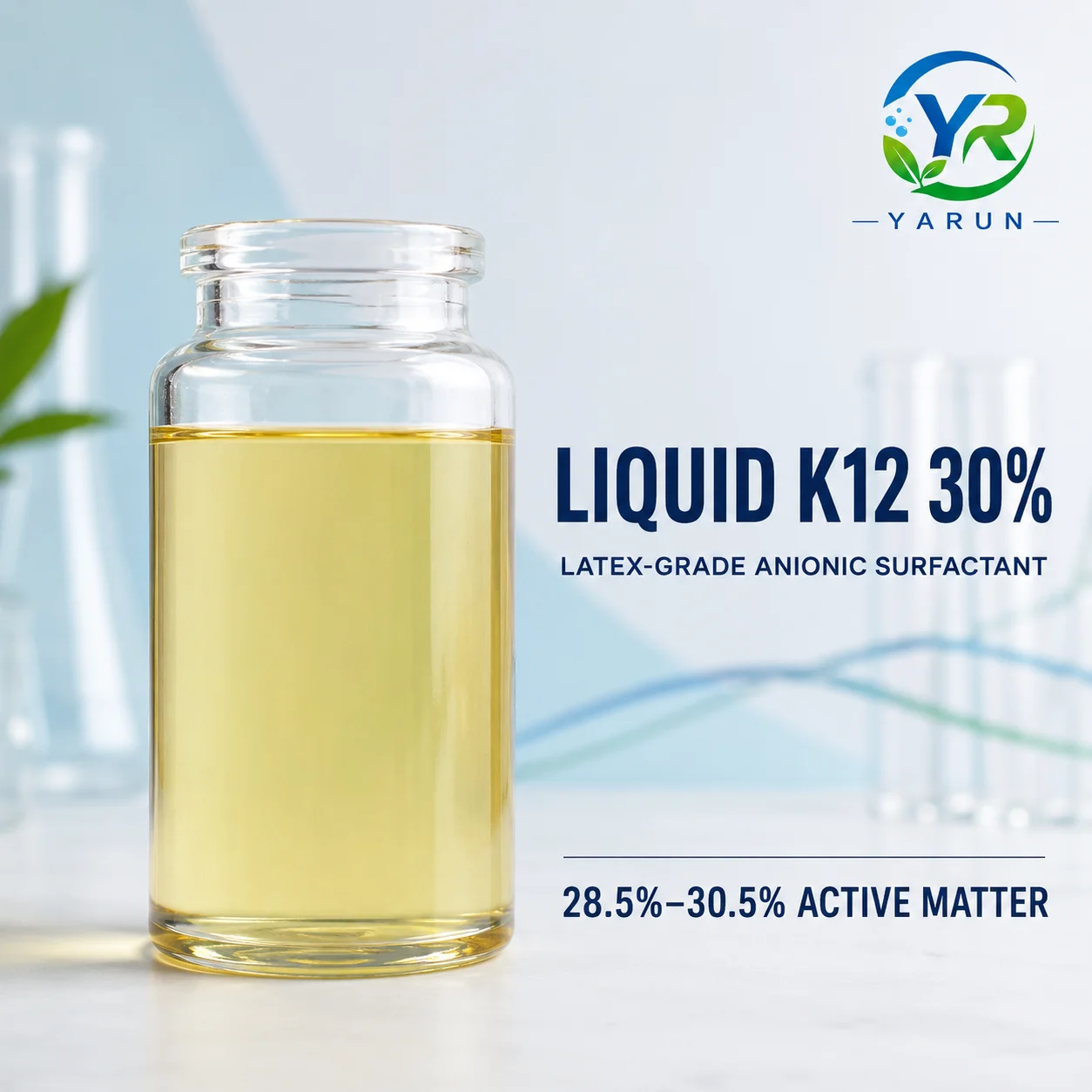
SLS Liquid 30% (Liquid K12) – Latex Grade
Liquid K12 30% is a latex-grade anionic surfactant supplied as a pale yellow transparent liquid with 28.5%–30.5% active matter. It is designed for liquid-phase dosing and may be evaluated as an emulsifier in selected synthetic latex, rubber and resin emulsion-polymerization systems. YARUN supplies the product in drums or IBC totes with a minimum order quantity of 1 MT. Final suitability depends on the applicable specification, processing conditions and completed formulation or polymerization trials.
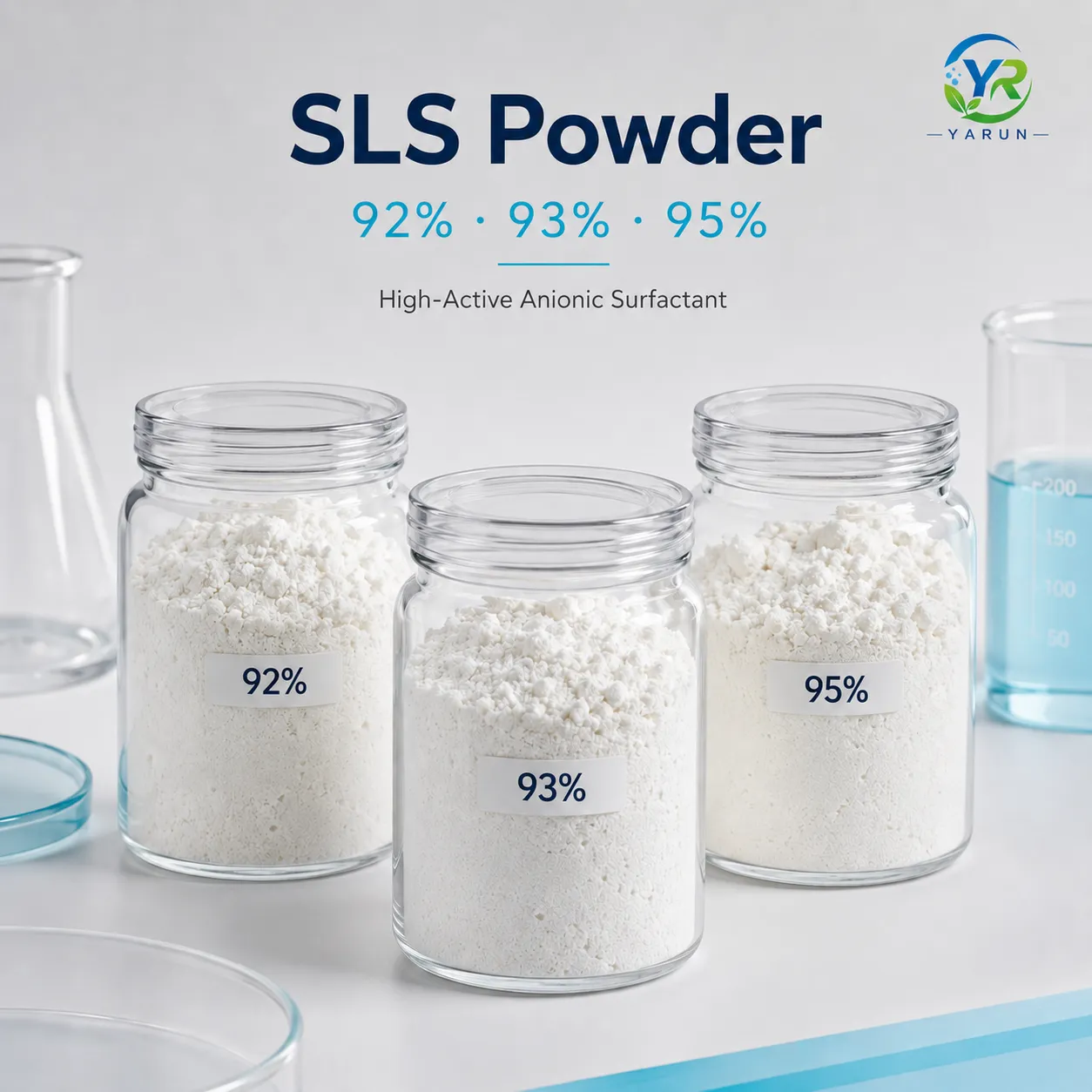
SLS Powder 92%, 93% and 95%
SLS Powder is a high-active anionic surfactant available in 92%, 93% and 95% grades. The three grades share the same powder form and fundamental surfactant mechanism but differ in active matter and sodium sulfate limits. YARUN helps detergent manufacturers compare grade concentration, inorganic-salt load, processing requirements and delivered cost per unit of active matter.
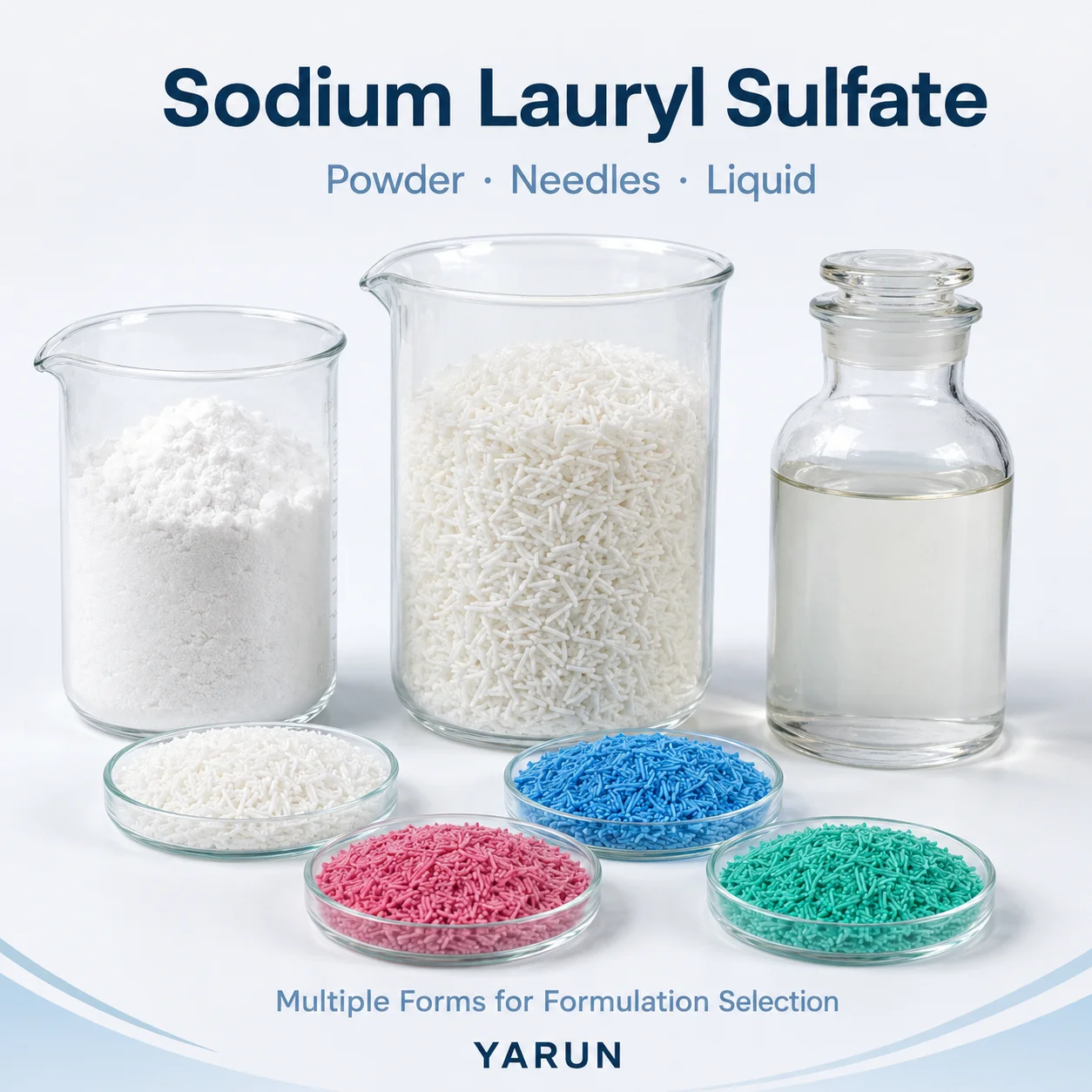
Sodium Lauryl Sulfate (SLS) – Forms, Grades and Selection
Sodium Lauryl Sulfate (SLS) is an anionic surfactant used for wetting, foaming, detergency and dispersion. YARUN offers SLS in powder, needle and liquid forms, including powder and needle grades at 92%, 93% and 95% active matter and SLS Liquid 30%. This page compares the available forms and helps buyers select an appropriate starting option according to product format, processing method and active-matter requirements.
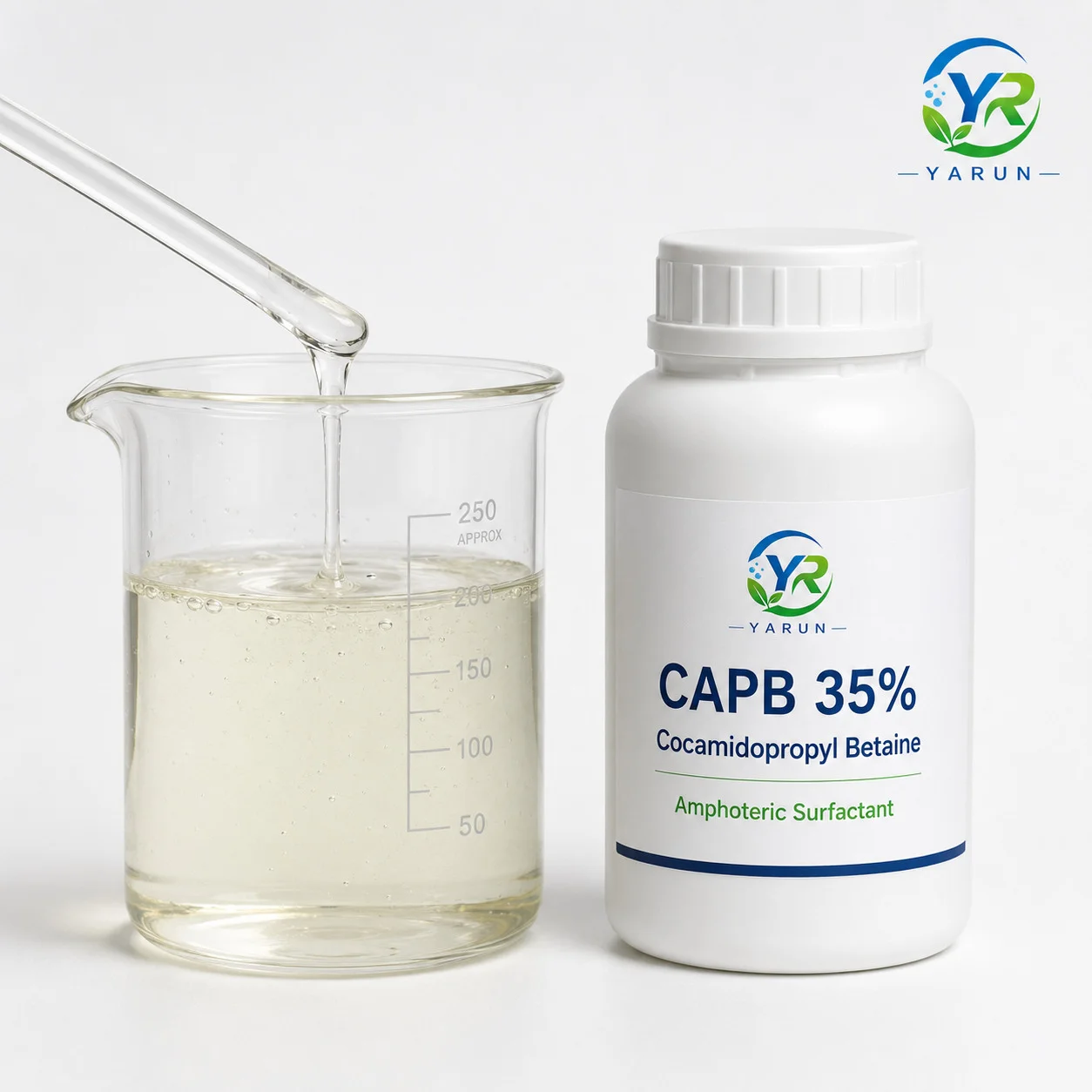
CAPB 35% Cocamidopropyl Betaine Amphoteric Surfactant
YARUN CAPB 35% is a versatile amphoteric surfactant used to improve foam stability, formulation mildness and viscosity in shampoo, hand wash, body wash, liquid soap, dishwashing liquid and household cleaning products. It is compatible with common anionic, nonionic and cationic surfactants and is especially suitable for combination with SLES, AOS and SLS.